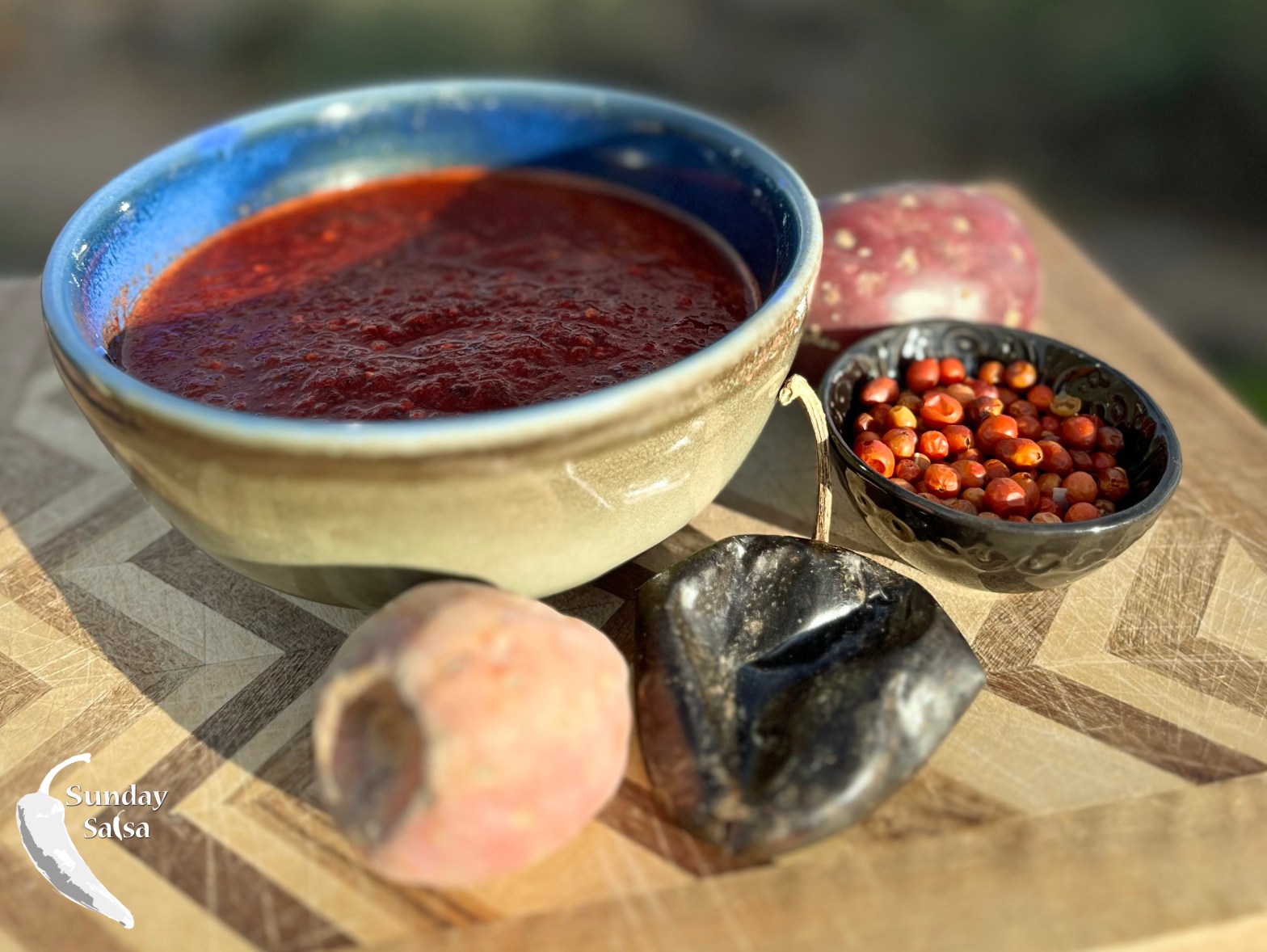
The chiltepíns and chile cascabel will hit you like thunder and lightning in Salsa Monzón, but just like a monsoon going through the desert you will be refreshed by the prickly pear fruit, xoconostle, and the scent of fresh epazote.

I was inspired to make this salsa after seeing all the prickly pear cactus bearing vibrant purple fruit (called tuna in Spanish), as a result of the recent monsoon rain we’ve received in Tucson. I’ve made a few other salsas in the past that included prickly pear syrup, but for Salsa Monzón I wanted to create a dish that highlighted the season the fruit are at their best.
I could have found some tunas in the desert to use for my recipe, but I wanted to leave those for the animals, so I went to El Super and Food City in search for the ingredient.
While I was at El Super I came across another type of prickly pear fruit that is not common in the United States that I had to include in Salsa Monzón. Xoconoslte (pronounced choko-nose-leh) is smaller, lighter in color, and has a sour taste compared to the tuna. The literal translation of the word from Nahuatl is sour (xococ) prickly pear (nōchtli). They are native to the Central Mexico highlands including where my great-great grandfather, Tata Espiridion, and his Huastec ancestors are from in Alaquines, San Luis Potosi. Traditionally the fruit was used for medicine, but has also been made into jams and salsas. Check out this article from Masa Americana for more amazing information about the xoconostle.

The tuna and xoconostle have a very distinct and pleasant flavor in Salsa Monzón that helps balance out the heat of the chiles, but there is another ingredient that refreshes your palate.

Epazote is an herb that originates from Southern Mexico, possessing a strong aromatic taste. Think of it like oregano, but much stronger. This is the first year I have planted epazote in my garden and during the first chubasco of the summer I instantly smelled the strong aroma of plant. Once you taste the epazote in Salsa Monzón you’re reminded of how peaceful a summer rainstorm can be.
But with every monsoon storm, there is always thunder and lightning. Chiltepíns always bring the heat and are very special to the Sonoran Desert, so I had to include them in this salsa. Chile Cascabel are known for their loose seeds that rattle inside, making them the perfect addition to Salsa Monzón to represent the sound of thunder and rain.
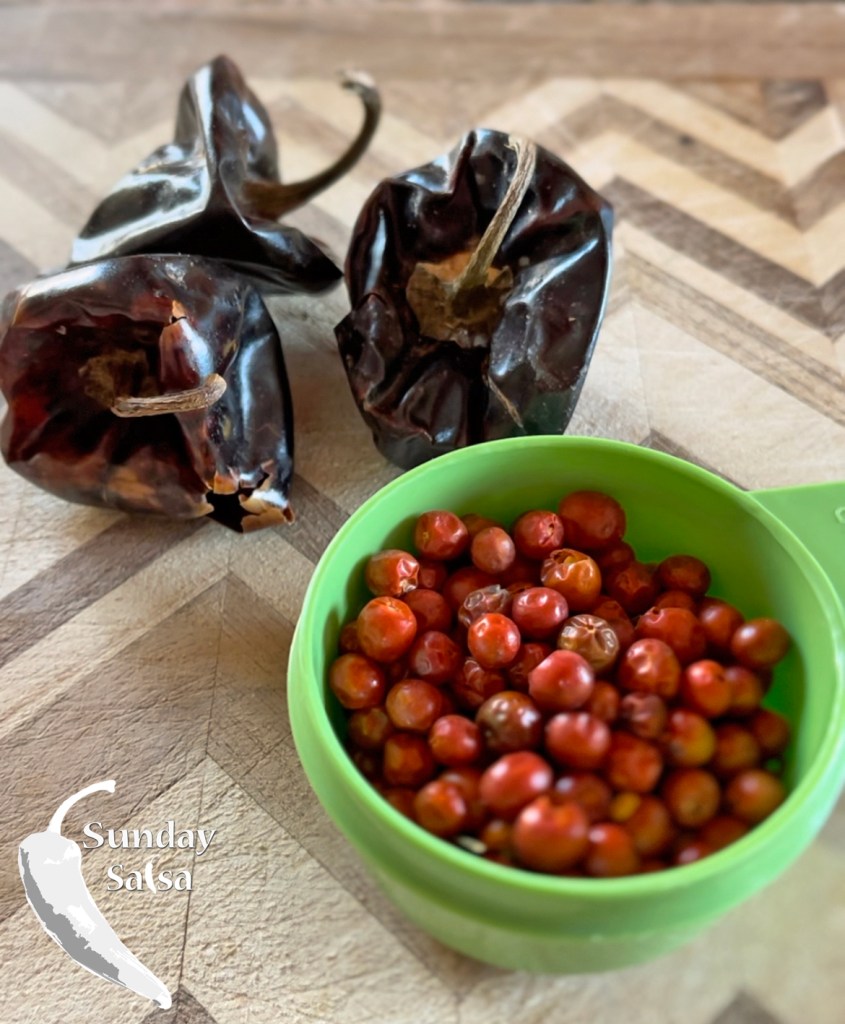
Salsa Monzón is perfect to make if you’re hosting an asada in the backyard, grilling chicken, carne asada, or fish. The dish can also be a relaxing way to enjoy an afternoon storm, eating chips and salsa while watching the desert be replenished by rain.

INGREDIENTS
4 prickly pear fruit
4 xoconostle
1/3 cup water
1/3 cup chiltepíns
3 cascabel peppers
2 red bell peppers
¼ red onion
3 garlic cloves
3 epazote leaves
¼ cup cilantro leaves
1 ½ tsp salt
½ tsp pepper
DIRECTIONS
Start by carefully removing the skin of the prickly pear fruit and xoconostle with a knife, tongs, and a spoon. While holding the fruit with the tongs, cut off one end of the fruit first. Then take the knife and cut around the inside of the fruit, so you can easily scoop out the inner portion. Transfer that inner portion of the fruit to a small blender. Once you have finished cutting up all eight fruit, add 1/3 cup of water to the small blender and purée for one minute. Next strain the liquid from the blender into a bowl, discarding the remainder of the seeds and thick fruit. Set aside the bowl for later.
Roast the bell peppers, onion, and garlic over medium heat with a comal (or in the oven) for five minutes or until lightly charred on all sides. Remove the bell pepper and let cool for a minute before cutting off the stem and removing the seeds. Then place the bell peppers, onion, and garlic in a blender.
Next, remove the stem and seeds from the cascabel peppers. Now add the chiltepíns, cascabels, the bowl of prickly pear and xoconostle liquid, and the remainder of the ingredients into the blender. Purée for one minute before serving.
 Sunday Salsa
One thought on “Salsa Monzón”